Frøya Organics
Facebook · Instagram · Audience Network · Video
The ad

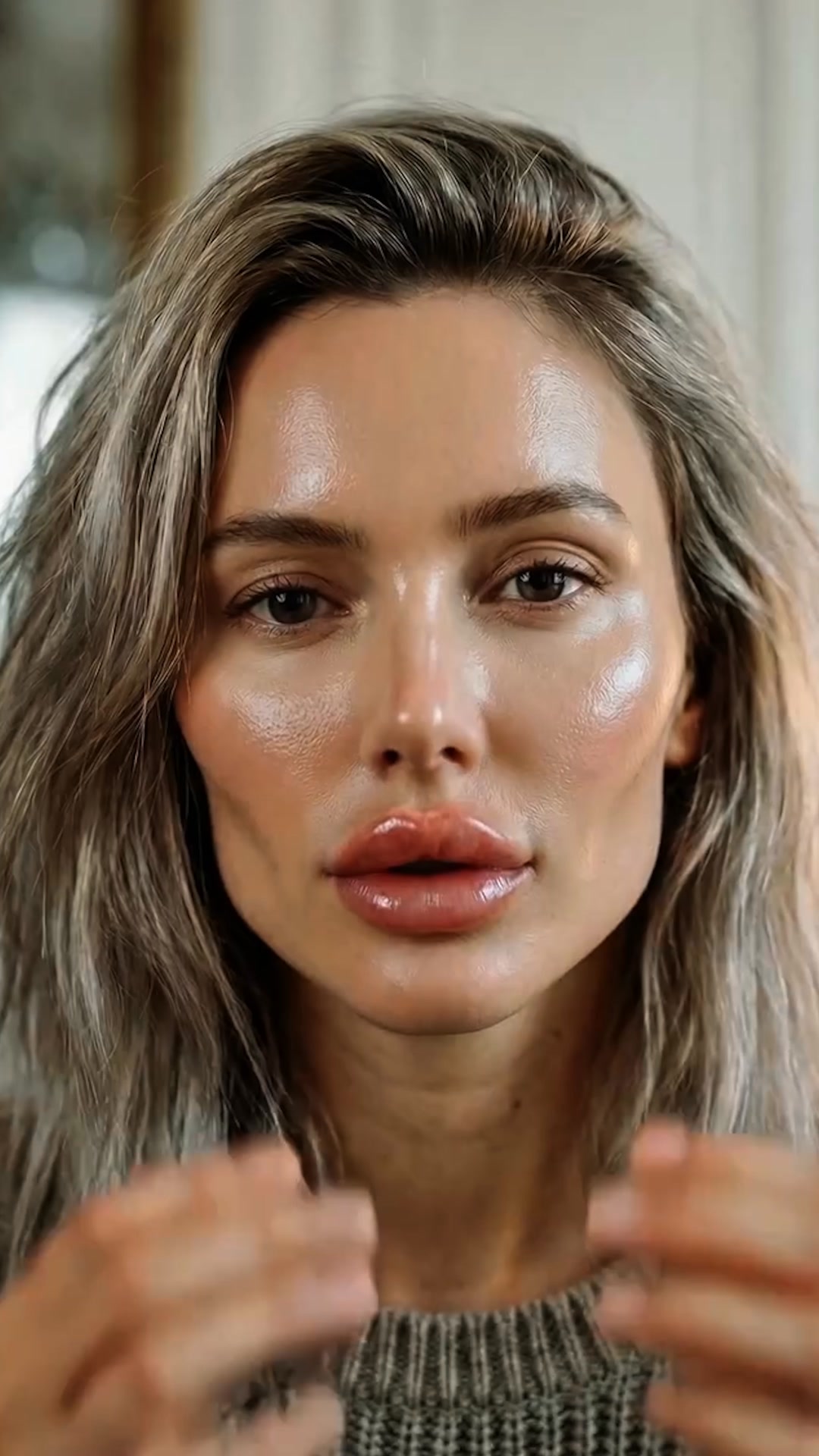
A Harvard dermatology study just shattered everything we thought about skincare. They tracked 1,200 women using premium anti-aging creams for 6 months. The result? Zero structural improvement in wrinkle depth. "We expected small changes," says lead researcher Dr. Kohn. "We found nothing." The culprit? Something called molecular size. Think of your skin like a tennis net. Water molecules slip through easily—they're tiny at 18 Daltons. But the "active ingredients" in your expensive cream? They're 50,000+ Daltons. It's like trying to squeeze a bowling ball through a buttonhole. Here's what stunned researchers: When they tested molecules under 500 Daltons, everything changed. Wrinkles decreased 47% in 4 weeks. Skin density increased 38%. Real changes visible on ultrasound. "We've been putting expensive ingredients on TOP of skin for decades," Dr. Kohn explains. "They never reach the dermis where aging happens." Norwegian scientists stumbled on the solution in 2025. They created 240-Dalton molecules from arctic plants that actually penetrate. A small brand grabbed the patents while mainstream brands slept. Dermatologists in 138 European clinics now use it exclusively. It just won the highest consumer award after beating dozens of luxury brands. See why plastic surgeons call this "the death of Botox" →
Harvard Study: “We’ve Been Applying Anti-Aging Creams Wrong For 30 Years.”
Shop nowThe funnel behind it

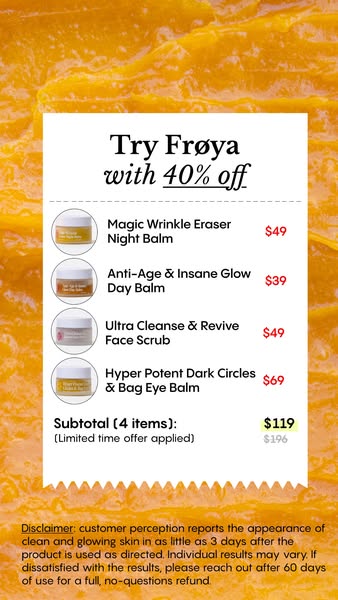
Offer: 46% discount (conditional on concern selection)
Funnel score
8-point CRO breakdown
How well the landing page behind the ad is built to convert, scored across 8 factors: offer, copy, speed, trust, mobile, message-match, CTA, and social proof.
This landing page is a concern-selection funnel designed to segment users before checkout. The ad promises a Harvard-backed scientific breakthrough with 46% off, but the landing page doesn't reinforce these claims visually or with social proof. The page relies entirely on the ad's narrative credibility, which is risky given the extraordinary claims (47% wrinkle reduction, 'death of Botox'). Key issues: (1) Poor PageSpeed (45) will hurt conversions; (2) No visible social proof, testimonials, or trust signals to validate ad claims; (3) CTA flow is indirect—users must select concerns before seeing pricing/product details; (4) Product details, ingredients, and benefits are not visible on the captured sections; (5) The concern-selection approach may feel like a bait-and-switch if the discount doesn't apply as expected. The page would benefit from: faster loading, visible customer reviews/testimonials, clearer product information, direct CTA to discount offer, and on-page validation of the Harvard/scientific claims made in the ad.
What this funnel does right. Steal these.
- Mobile experience: Layout appears mobile-optimized with full-width buttons and vertical stacking. Text is readable. However, the long vertical scroll required to see all options may create friction on mobile devices.
- Headline: Strong headline matching ad copy ('WANT 46% OFF?'). Creates curiosity and urgency. However, the main value proposition (arctic herbs, molecular size advantage) is buried below the fold in the ad copy, not prominently featured on the landing page itself.
- Message match: Good alignment between ad (Harvard study, molecular size, 46% off) and landing page (discount offer, concern-based selection). However, the ad's detailed scientific narrative and product benefits are not reinforced on the visible page sections. Page feels like a generic discount funnel rather than a science-backed product showcase.
Where it's weak
- Page speed: PageSpeed score of 45 is poor. Indicates slow load times, which will negatively impact conversion rates and user experience, especially on mobile. This is a significant CRO liability.
- Social proof: Minimal social proof visible. Ad mentions Harvard study, Norwegian scientists, 138 European clinics, and consumer awards, but none of this is displayed on the captured landing page sections. No testimonials, reviews, ratings, or trust badges visible. Heavy reliance on ad copy claims without page-level validation.
- Call to action: Multiple CTAs present (4 orange buttons for concern selection + 'I want to pay full price' link), but primary CTA is indirect—users must select concerns first. No clear 'Shop Now' or 'Get 46% Off' button visible. CTA hierarchy is confusing; unclear which action completes the purchase.
- Trust signals: Brand logo (FRØYK) visible but minimal trust signals on page. Ad mentions Harvard, Norwegian scientists, 138 clinics, and awards, but these claims are unverified on the landing page. No security badges, certifications, guarantees, or customer reviews visible. High-claim ad copy without page-level credibility support creates skepticism.
Full breakdown
Multiple CTAs present (4 orange buttons for concern selection + 'I want to pay full price' link), but primary CTA is indirect—users must select concerns first. No clear 'Shop Now' or 'Get 46% Off' button visible. CTA hierarchy is confusing; unclear which action completes the purchase.
PageSpeed score of 45 is poor. Indicates slow load times, which will negatively impact conversion rates and user experience, especially on mobile. This is a significant CRO liability.
Brand logo (FRØYK) visible but minimal trust signals on page. Ad mentions Harvard, Norwegian scientists, 138 clinics, and awards, but these claims are unverified on the landing page. No security badges, certifications, guarantees, or customer reviews visible. High-claim ad copy without page-level credibility support creates skepticism.
Layout appears mobile-optimized with full-width buttons and vertical stacking. Text is readable. However, the long vertical scroll required to see all options may create friction on mobile devices.
Strong headline matching ad copy ('WANT 46% OFF?'). Creates curiosity and urgency. However, the main value proposition (arctic herbs, molecular size advantage) is buried below the fold in the ad copy, not prominently featured on the landing page itself.
Minimal social proof visible. Ad mentions Harvard study, Norwegian scientists, 138 European clinics, and consumer awards, but none of this is displayed on the captured landing page sections. No testimonials, reviews, ratings, or trust badges visible. Heavy reliance on ad copy claims without page-level validation.
Good alignment between ad (Harvard study, molecular size, 46% off) and landing page (discount offer, concern-based selection). However, the ad's detailed scientific narrative and product benefits are not reinforced on the visible page sections. Page feels like a generic discount funnel rather than a science-backed product showcase.
The 46% discount is clearly stated, but the page requires users to select concerns to proceed. The actual product offer and pricing are not visible in the captured sections. Value proposition is vague—unclear what specific product is being sold.
More ads from Frøya Organics
View all →

546dVIDEOUltra-Potent Natural Skincare
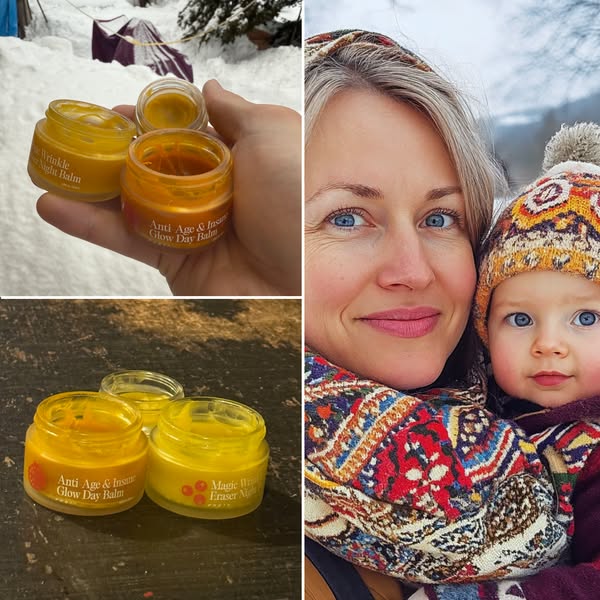
531dIMAGESide-effect: my skin is glowing
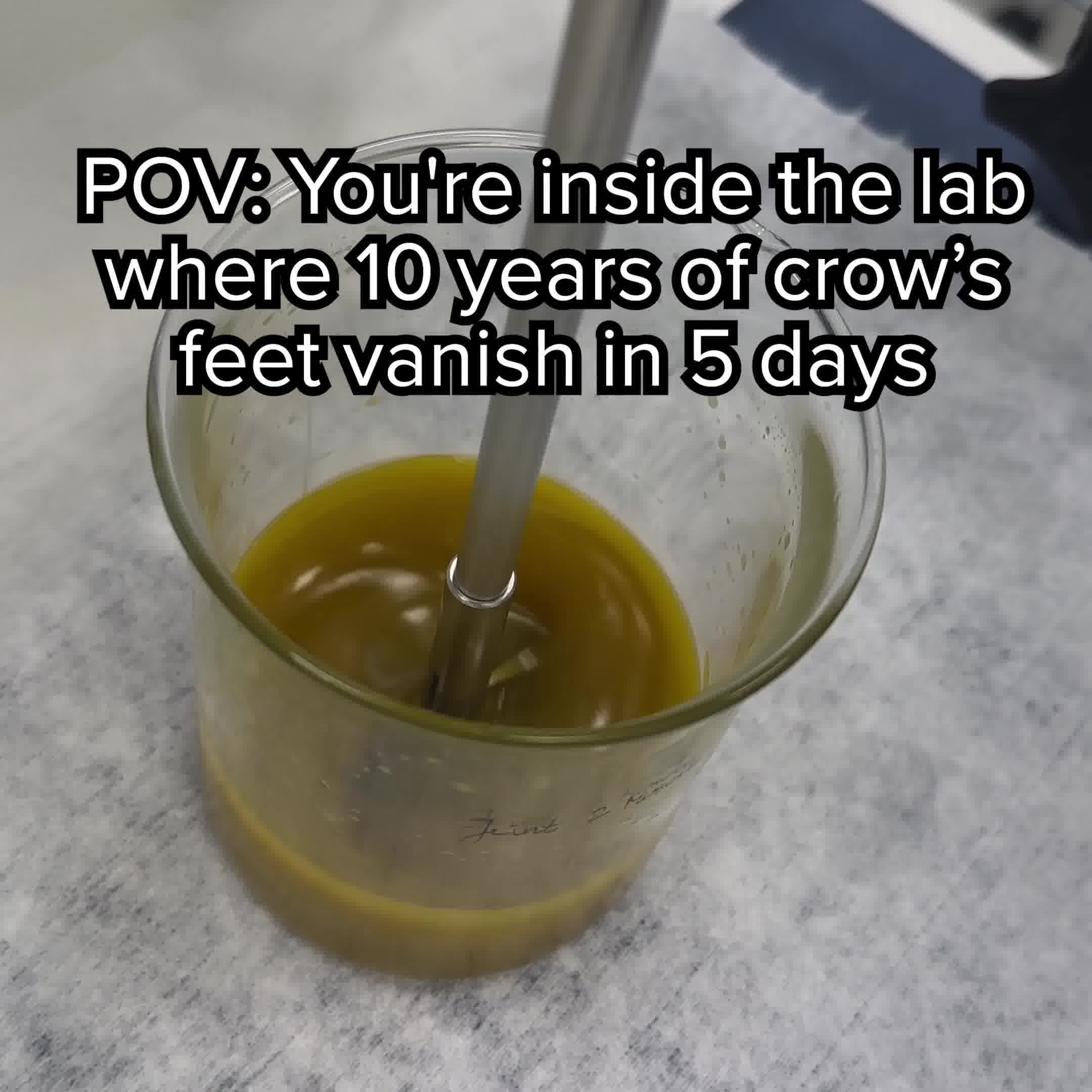
454dVIDEOYounger SKIN or Money Back
412dIMAGEMy Husband Was Shocked
340dIMAGE“My skin cells are waking up!”
340dVIDEOYour skincare is making you age faster 🤯
Keep exploring
Data from the public Meta Ad Library. Funnelens is not affiliated with or endorsed by Meta. See data sources.